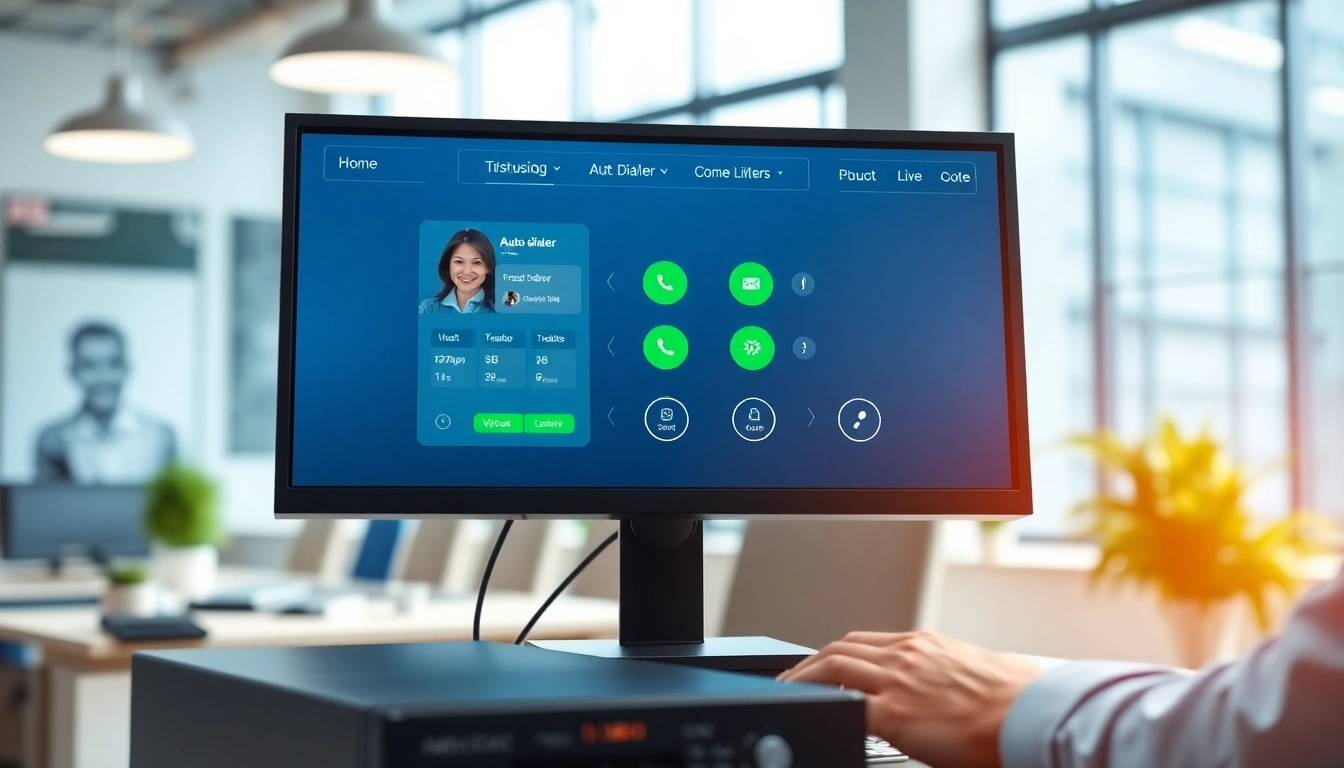
Understanding the Auto Dialer: Basics and Functionality
What is an Auto Dialer?
An auto dialer, in essence, is a sophisticated technology designed to streamline the process of making outbound calls. It automatically dials phone numbers from a pre-loaded list and connects answered calls to the appropriate live agents. This system is prevalent in call centers, telemarketing firms, and various industries that rely heavily on customer outreach. By automating the dialing process, it significantly enhances efficiency, allowing agents to focus on conversations rather than the repetitive task of dialing. For businesses seeking to maximize their outreach, investing in an auto dialer can be transformative.
Key Features of an Auto Dialer
Auto dialers come equipped with several essential features that enhance their utility:
- Predictive Dialing: This feature increases agent productivity by dialing multiple numbers simultaneously and predicting when an agent will be available to take a call.
- Voicemail Detection: Advanced auto dialers can identify whether a call has gone to voicemail, allowing businesses to decide the next steps effectively.
- Call Recording: This feature is vital for training, quality assurance, and compliance, enabling organizations to monitor and review calls.
- Data Integration: Many auto dialers support CRM systems, ensuring that data is seamlessly transferred and managed throughout the calling process.
- Reporting and Analytics: Robust reporting capabilities allow businesses to track performance metrics, monitor call outcomes, and analyze trends over time.
How Auto Dialers Work
Auto dialers can operate through various mechanisms such as VoIP (Voice over Internet Protocol) or traditional phone lines, enabling them to dial contacts automatically based on predefined lists. Upon connection, calls are routed to available agents or recorded messages can be delivered based on the business needs. The process typically involves the following steps:
- The auto dialer uploads a pre-defined list of phone numbers into its system.
- Based on call routing rules, the dialer begins to initiate calls.
- When a call is answered, the system detects this and, depending on the settings, either connects the caller to an agent or plays a pre-recorded message.
- Calls that go unanswered or are diverted to voicemail are handled accordingly, wherein the system can either retry the call or move to the next number in the list.
The Benefits of Using an Auto Dialer
Enhancing Call Efficiency
Efficiency in outbound calling is paramount for businesses aiming to maximize their contact rate. Auto dialers drastically reduce the time agents spend waiting between calls or dialing manually. By enabling agents to handle more calls in a shorter time, businesses can improve their metrics significantly. For instance, predictive dialers can result in as much as a 200-300% increase in agent productivity, allowing for more opportunities to engage with customers and leads.
Improving Connect Rates
Connect rates are crucial for the success of outbound calling campaigns. Traditional manual dialing often results in longer wait times and dropped calls. In contrast, an auto dialer optimizes the calling process by automatically filtering through busy signals, no answers, and answering machines, directing agents to live answers more frequently. This capability enhances the chances for meaningful conversations, which can directly influence sales and customer satisfaction.
Cost-Effectiveness of Auto Dialers
Implementing an auto dialer can lead to significant cost savings for businesses. By increasing agent efficiency and connect rates, organizations can achieve higher sales volumes without necessarily increasing staffing costs. Additionally, many auto dialers are cloud-based and operate on a subscription model, making them accessible for organizations of various sizes without large upfront investments in hardware or software.
Choosing the Right Auto Dialer for Your Business
Assessing Your Needs
Before selecting an auto dialer, businesses must assess their specific needs and goals. Consider factors such as the size of your team, the volume of calls, the types of calls you'll be making (e.g., sales, customer service), and any regulations that may impact your dialing practices, such as telemarketing laws.
Comparing Features and Pricing
Different auto dialers come with varying feature sets and pricing structures. It’s essential to evaluate the features that are most beneficial for your operations, such as predictive dialing, integration capabilities, and caller ID customization. Compare several options based on these features and analyze pricing models to find one that aligns with your budgetary constraints while fulfilling your requirements.
User Reviews and Testimonials
Real user experiences can provide invaluable insights into the effectiveness of specific auto dialer solutions. Look for testimonials and reviews from companies that have used the software to understand its performance in real-world settings. Pay particular attention to customer support experiences and the ease of use, which are critical for seamless implementation.
Best Practices for Implementing an Auto Dialer
Integrating with Current Systems
Successful implementation of an auto dialer requires effective integration with existing systems, such as your CRM and communication platforms. Ensuring data flows seamlessly between systems is crucial for maximizing efficiency and accuracy in dialing. Collaborate with your IT team or external consultants to develop a robust integration plan that meets your business needs.
Training Your Team
Comprehensive training is essential for ensuring that your team utilizes the auto dialer to its full potential. Conduct training sessions that cover not only the technical aspects of operating the system but also best practices for engaging with customers over the phone. This dual-focus training can enhance agent confidence and effectiveness in utilizing the tool.
Monitoring Performance Metrics
Once your auto dialer is in use, it is vital to establish performance metrics to evaluate its effectiveness continuously. Key performance indicators (KPIs) should include metrics such as call volume, connection rates, conversion rates, and agent productivity. Regularly reviewing these metrics can offer insights into areas needing improvement and help refine your overall communication strategy.
Future Trends in Auto Dialer Technology
Advancements in Automation
The future of auto dialer technology promises continuous advancements in automation. Expect more sophisticated algorithms that enhance predictive dialing capabilities, allowing systems to better manage call volumes and agent availability. Moreover, automation will increasingly integrate with CRM systems, streamlining processes further and reducing the need for manual input.
Impact of AI and Machine Learning
AI and machine learning are set to revolutionize how auto dialers function. By leveraging vast amounts of data, these technologies will learn from past interactions to enhance future calling strategies. Additionally, natural language processing could elevate automated responses, making interactions with customers more fluid and responsive.
Shift to Cloud-Based Solutions
The shift towards cloud-based solutions will continue to reshape the auto dialer landscape. These solutions offer greater scalability, flexibility, and cost-effectiveness compared to traditional on-premise systems. With cloud technology, businesses of all sizes can access and utilize advanced features that were previously available only to larger enterprises, democratizing access to high-performance auto dialing capabilities.